
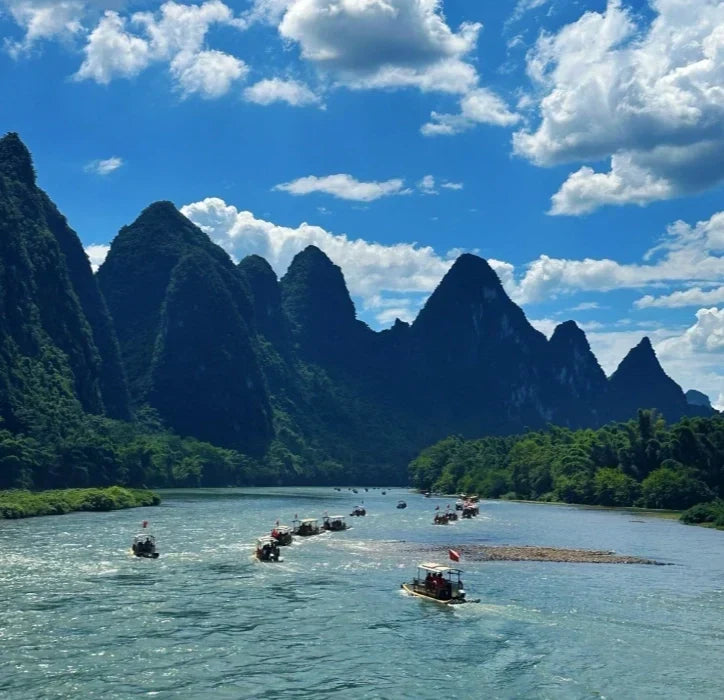
Quick Answer
For a first visit, I usually recommend four to five days:
- One day in the city
- One day on a Li River cruise
- Two days around Yangshuo
- One day for Xingping or the Longji Rice Terraces
Three days are enough for the main highlights, while seven days allow for a slower trip with villages, hiking, food experiences, and mountain stays.
Quick FAQ Table
| Question | Short answer |
|---|---|
| How many days are ideal? | Four to five days |
| When is the best time? | Spring and autumn are generally comfortable |
| Should I stay in the city or Yangshuo? | Stay in the city for transport; Yangshuo for a slower rural experience |
| Is a river cruise the same as bamboo rafting? | No, they are different activities.s |
| Can foreigners buy high-speed train tickets? | Yes, with a valid passport |
| Do I need to speak Chinese? | No, but save Chinese addresses |
| Should I carry cash? | Carry a small amount as backup.p |
| Can hotels register foreign guests? | Confirm before booking |
| Is tipping required? | No, China does not have a compulsory tipping culture |
| Should I book in advance? | Yes, especially cruises, holidays, and popular hotels |
1. Is It Worth Visiting?
Yes, especially if you enjoy mountains, rivers, countryside, food, and slower travel.
The attraction is not just one landmark. The region combines karst peaks, rivers, ancient towns, villages, minority cultures, local dishes, cycling routes, and outdoor activities.
I suggest leaving some free time in your schedule. Sitting beside the river, eating noodles at a small restaurant, or walking through a village can be just as memorable as visiting a famous viewpoint.
2. How Many Days Should I Spend?
Three days
A practical route is:
- Day 1: City attractions
- Day 2: Li River cruise to Yangshuo
- Day 3: Yangshuo or Xingping Ancient Town
Five days
This is the most balanced option:
- One day in the city
- One day for the river cruise
- Two days in Yangshuo
- One day for Xingping or Longji
Seven days
Add:
- One night in the rice terraces
- Minority villages
- Countryside cycling
- Local food experiences
- Smaller attractions around Yangshuo
3. When Is the Best Time to Visit?
April to May and September to November are often comfortable periods.
Spring is fresh and green, but it can be rainy. Summer has lush scenery but can be hot and stormy. Autumn is usually pleasant for cruises, cycling, and hiking. Winter is quieter but may feel damp and foggy.
Chinese public holidays such as Spring Festival, May Day, and National Day can be very crowded. Book hotels and cruises early during those periods.
4. Where Should I Stay?
Choose the city if you want:
- Convenient rail and airport connections;
- City attractions;
- Restaurants and convenience stores;
- Easier access to Longji;
- A more practical base for a short visit.
Choose Yangshuo if you want:
- Rivers, villages, and cycling;
- Bamboo rafting;
- Countryside views;
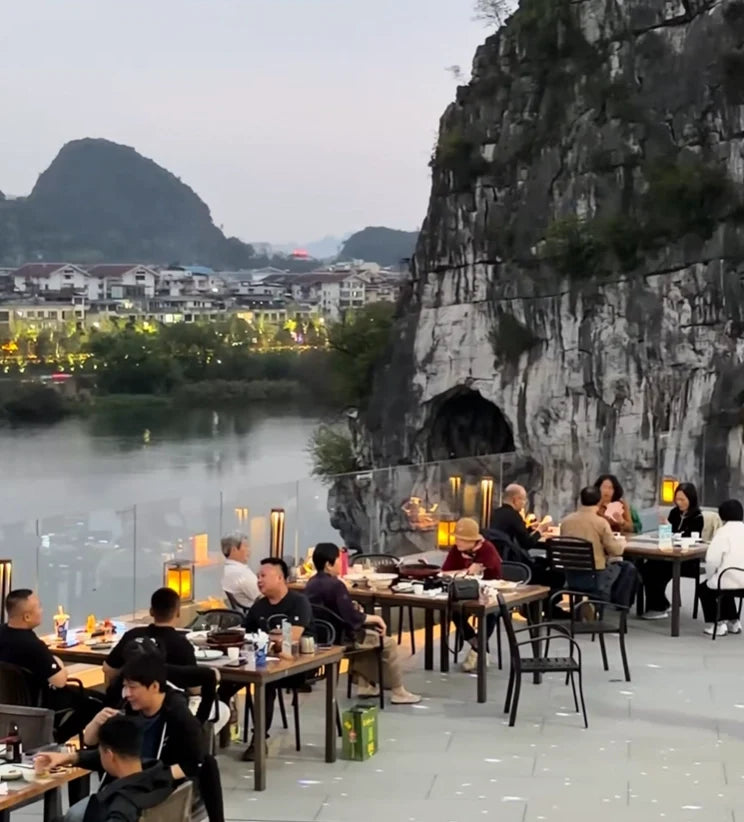
- Evening walks and restaurants;
- A slower two-day stay.
For a first trip, I usually suggest one or two nights in the city and two nights in Yangshuo.
5. What Is the Difference Between a River Cruise and Bamboo Rafting?
A Li River cruise is a longer sightseeing journey by boat, usually connecting Guilin and Yangshuo.
Yulong River bamboo rafting is a quieter countryside activity. It is a separate product with different boarding points, schedules, and return arrangements.
Before paying, confirm:
- The boarding pier;
- The final destination;
- Whether transport is included;
- Whether lunch is included;
- Whether the return journey is included;
- What happens if the activity is cancelled because of the weather?
The official Li River tourism website currently publishes ticketing and release information. Always check the latest notice before booking.
6. Can Foreign Visitors Buy High-Speed Train Tickets?
Yes. Foreign passengers can generally purchase real-name train tickets using a valid passport.
Make sure that:
- Your name matches the passport;
- Your passport number is correct;
- You bring the same passport to the station;
- You use the official China Railway 12306 website or app;
- You do not trust anyone selling “secret tickets.”
The official 12306 FAQ explains that foreign passengers may use valid passports for real-name ticketing.
7. How Can I Reach the Region from Other Chinese Cities?
You can usually travel by air or high-speed rail.
Guilin Liangjiang International Airport is useful for longer domestic journeys. High-speed rail is convenient from cities such as Guangzhou, Shenzhen, Changsha, Guiyang, and Nanning.
There are several railway stations in the area, so check the exact station name before booking.
8. Do I Need a Chinese Visa?
This depends on your nationality, purpose of travel, length of stay, point of entry, and the visa-free or transit rules in effect at the time of travel.
Do not rely only on another traveller’s experience. Check the latest information from:
- The National Immigration Administration
- The Chinese embassy or consulate in your country
- Your airline or entry port
Keep your passport, accommodation address, and onward travel information available.
9. Do Foreign Visitors Need Accommodation Registration?
Yes, this is an important requirement.
Hotels normally submit accommodation registration information for foreign guests. If you stay in a private home, apartment, or other non-hotel accommodation, the guest or host generally needs to complete registration within 24 hours.
Since March 20, 2026, Guangxi has been included in a pilot program for online accommodation registration. The service is available through NIA government platforms, the NIA 12367 App, WeChat, or Alipay. See the official NIA announcement.
Before booking a guesthouse, ask:
“Can you register a foreign passport?”
“Can you complete foreign guest accommodation registration?”
10. How Should I Pay?
Mobile payment is widely used. Depending on your bank and account, you may be able to use Alipay, WeChat Pay, bank cards, and cash.
The Guide to Payment Services in China explains payment options for international visitors.
My practical recommendation is to carry:
- One working mobile-payment option;
- One backup bank card;
- A small amount of Chinese cash.
Check the merchant name and amount before confirming an aQR code payment.
11. How Much Does a Daily Trip Cost?
These are rough estimates excluding international flights and luxury hotels. The dollar conversion uses the fixed ratio of RMB 7 to USD 1.
| Travel style | RMB per person per day | Approx. USD |
|---|---|---|
| Budget | RMB 250–500 | USD 36–71 |
| Comfortable | RMB 500–1,000 | USD 71–143 |
| Higher-end | RMB 1,000–2,000 | USD 143–286 |
Prices rise during public holidays and peak travel periods.
12. Is Tipping Required?
No. China does not have a compulsory tipping culture.
You may give a voluntary tip for especially good service, but normal service should not depend on tipping.
13. Can I Travel Without Speaking Chinese?
Yes, but preparation helps.
Save the Chinese versions of:
- Your hotel name and address;
- Railway station names;
- Scenic-area names;
- Your driver’s license plate;
- Booking confirmations.
English is more common in central hotels and major attractions than in rural villages. A translation app, an offline language pack, and screenshots are very useful.
14. What Food Should I Try?
Start with:
- Guilin rice noodles;
- Yangshuo beer fish;
- Lipu taro pork;
- Stuffed river snails;
- Yao oil tea;
- Bamboo-tube rice;
- Local fruit and rice cakes.
Ask about prices before ordering, especially for fish, shrimp, chicken, and other food sold by weight. In China, one jin usually means 500 grams.
Useful phrases include:
- “I do not eat spicy food.”
- “I am vegetarian.”
- “I am allergic to peanuts.”
- “Does this dish contain meat?”
15. Is the Area Safe?
The main tourist areas are generally suitable for normal travel, but use common sense.
Be careful on:
- Wet mountain paths;
- River and bamboo-rafting activities;
- Unprotected viewpoints;
- Rural roads at night;
- Unlicensed transport;
- Unclear low-cost tours.
Emergency numbers are:
- 110 Police
- 120 Medical emergency
- 119 Fire
- 12315 Consumer complaints
- 12345 Local public services
16. Can I Still Travel in the Rain? Rain, but outdoor plans may need to change.
Rainy days are ideal for museums, historic buildings, local food, shopping streets, and a slower hotel stay. Heavy Rain or high water may affect cruises, rafting, hiking trails, and mountain roads.
A cancelled activity is not automatically a scam. Check the official notice and ask the booking platform about refunds or rescheduling.
17. Is It Suitable for Children and Older Travellers?
Yes, but avoid overpacking the schedule.
River cruises are relatively comfortable, while Longji, ancient-town streets, and rural trails may involve stairs, slopes, and slippery stones.
Choose accommodation with easy access to public transport and avoid combining a long cruise with strenuous hiking on the same day.
18. Is It Suitable for Solo Travellers?
Yes. The city centre, Yangshuo, and major attractions have established tourism services.
Solo travellers should choose well-reviewed accommodation, avoid isolated roads at night, confirm private-car details, and share their itinerary with someone at home.
19. How Can I Avoid Common Tourist Problems?
Follow five simple rules:
- Confirm the total price before paying.
- Do not accept pressure from strangers.
- Avoid tours without written itineraries.
- Keep receipts, menus, messages, and booking records.
- Use official or traceable ticketing channels.
If someone says you must buy immediately because the price will disappear, step away and verify the information independently.
20. Final Checklist
Before departure, confirm that:
- Your passport and visa conditions are valid;
- Your hotel accepts foreign passports;
- You have the hotel address in Chinese;
- Your transport tickets are saved offline;
- You know the cruise pier and final destination;
- You know whether rafting includes return transport;
- Your payment method works;
- You have a backup card and some cash;
- You have checked weather and attraction notices;
- You know the emergency and complaint numbers.
Final Advice from a Chinese Traveller
As a Chinese person, I do not think a good trip means visiting every attraction as quickly as possible. It is more important to understand where you are staying, how you will move around, how tickets work, and what to do if the weather changes.
With a realistic route and a little preparation, first-time visitors can enjoy the mountains, rivers, food, villages, and slower rhythm of this region with much less stress. This Guilin travel FAQ is a useful pre-trip checklist, but always confirm current rules with official sources.


Leave a comment
All comments are moderated before being published.
Este site está protegido pela Política de privacidade da hCaptcha e da hCaptcha e aplicam-se os Termos de serviço das mesmas.