
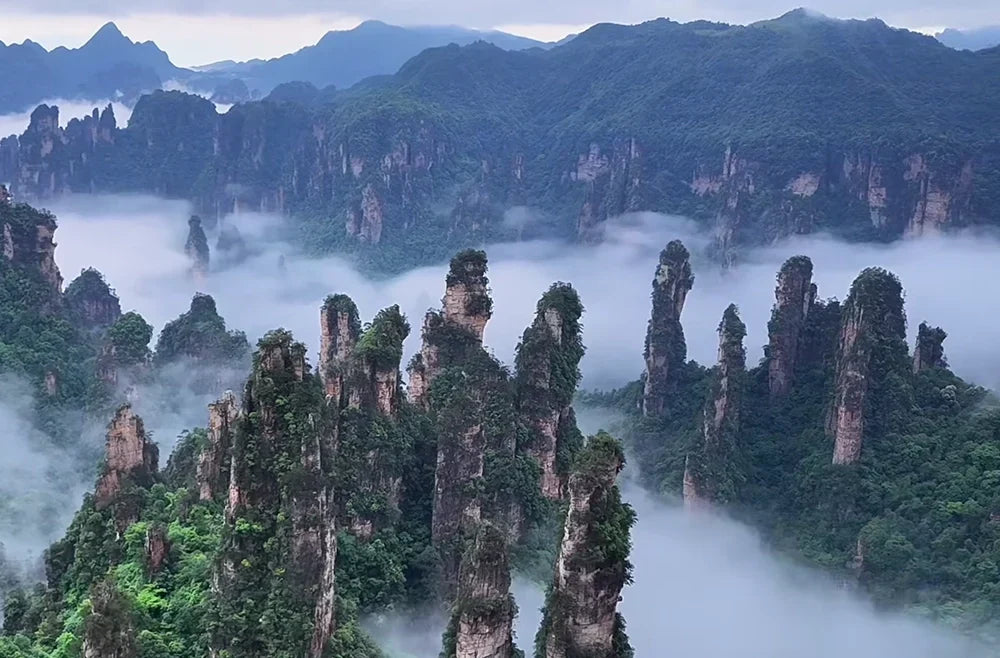
For a first visit, I suggest April to May or late September to mid-October.
These periods usually offer pleasant temperatures, attractive mountain scenery, and good conditions for exploring Wulingyuan, the national forest park, and Tianmen Mountain.
As a Chinese person who often explains travel in China to overseas visitors, I can say that no single season is perfect for everyone. Each period creates a different landscape.
Spring brings fresh greenery and mist. Summer offers the richest vegetation. Autumn usually has clearer light, while winter can be quiet and occasionally frosty at higher elevations.
The right choice depends on what you want to see and how you prefer to travel.
Quick Answer: Which Season Is Best?
| March–May | Fresh greenery, flowers and mist | Good for hiking and photography |
| June–August | Lush forests, heat and frequent rain | Beautiful, but prepare for humidity |
| September–October | Comfortable weather and clearer views | Best overall balance |
| November | Cooler air and a quieter atmosphere | Good for slower travel |
| December–February | Cold, damp conditions and possible frost | Suitable for winter scenery and lower-season travel |
Local tourism information describes the region as having a humid subtropical monsoon climate, with an annual average temperature of about 16°C. April through October is generally considered a favourable period, with April and October often highlighted as particularly attractive months.
My Favourite Period: April to May
If you want fresh forests, flowing streams, and a good chance of mist without the strongest summer heat, I suggest spring.
The vegetation around Wulingyuan becomes increasingly green, and the paths beside Golden Whip Stream feel especially lively. After rain, clouds may gather in the valleys and partially hide the stone pillars.
I love taking visitors along the stream during this season. Looking down from a mountain viewpoint is impressive, but walking slowly beside the water gives you a more intimate experience. You hear the stream, the birds, and your own footsteps instead of moving from one viewpoint to the next.
Why I Like Spring
- Comfortable conditions for walking
- Bright green forests
- Atmospheric mist after rainfall
- Good opportunities for photography
- Better suited to long walks than the hottest months
What Should You Pack?
Spring weather can change quickly. A sunny morning may turn into a wet afternoon, especially in the mountains.
Bring:
- A waterproof jacket
- A compact umbrella or rain poncho
- Comfortable shoes with good grip
- A light outer layer
- A waterproof pouch for your phone
If occasional rain does not bother you, spring offers one of the most memorable versions of the landscape.
Late September to Mid-October: The Best Overall Balance
For comfortable temperatures, clearer, sharper views, and better photography conditions, I usually recommend early to mid-autumn.
The strong summer humidity begins to fade, and the air often appears fresher. On a clear day, the sandstone pillars around Yuanjiajie, Tianzi Mountain, and Huangshizhai are easier to see from across the valleys.
The forests may not be completely red or golden in early October, but that is not necessarily a disadvantage. For me, autumn is about the light as much as the leaves.
In the afternoon, sunlight casts strong layers of light and shadow across the cliffs. Even with an ordinary phone, you can often take beautiful photographs.
Autumn Advantages
- Comfortable temperatures
- Good conditions for longer walks
- Clearer mountain outlines
- Attractive natural light
- Pleasant contrasts between morning and afternoon
What Should You Watch Out For?
Autumn is a popular travel period, especially during major Chinese public holidays. If you want shorter queues, avoid the National Day holiday period and book accommodation and transport early.
If October is your only option, travelling after the holiday is usually more relaxed than visiting during the peak dates.
Summer: The Greenest but Also the Wettest
From June to August, the forests are at their fullest. Streams, waterfalls, and shaded paths can feel refreshing, especially compared with the heat in the city.
However, I want to be honest about the conditions. Summer can be hot and humid, and sudden showers or thunderstorms are possible. It is also a popular period for family and student travel.
China Weather information reports an annual average temperature of around 16°C and a July average of roughly 27°C. Because the city and the scenic mountains sit at different elevations, the temperature and wind can feel quite different within a single day.
Summer Is Best For:
- Travellers who want lush green scenery
- Families and students
- Visitors who enjoy streams and waterfalls
- People are comfortable with heat and rain
My Summer Advice
Start early each day. The morning is usually more comfortable for walking and photography.
Around midday, take a break in a shaded area or choose a forest route. Carry drinking water, sun protection, and rain gear.
Even when the city forecast says it will be sunny, I would still bring a waterproof layer. Mountain weather often has its own plan.
November: Quiet and Pleasant for Slow Travel
November is easy to overlook, but I often recommend it to visitors who dislike crowded viewpoints.
Some trees begin to change colour, temperatures become cooler, and the atmosphere is generally calmer than during summer or major holidays.
You may not see intense autumn foliage every day, but you may have more time to stand at a viewpoint, walk at your own pace, and enjoy a proper local meal afterwards.
For me, November is not about chasing one perfect photograph. It is about letting the landscape unfold more slowly.
Winter: Fewer Visitors and Occasional Frost
From December to February, the mountains can feel cold, especially early in the morning and at higher elevations.
The advantages are quieter paths and, at times, easier accommodation arrangements. During periods of low temperature, frost or occasional snow may transform the peaks and trees into a completely different landscape.
Winter also requires more attention to safety. Wet steps, ice, fog and strong wind can affect walking conditions and some transport services.
Winter Packing List
- A warm outer jacket
- Shoes with good grip
- Gloves and a hat
- A thermos or insulated bottle
- Spare socks
- A waterproof backpack cover
I would not recommend winter as my first choice for visitors who dislike cold weather or have little experience with mountain travel. But for travellers who want peace, lower-season conditions or a different view of the landscape, it can be rewarding.
Which Season Is Best for Different Travel Goals?
For misty, atmospheric scenery
Choose spring, early winter or the period immediately after rainfall.
Mist cannot be guaranteed, but humid weather followed by clearing skies often creates dramatic views.
For clear long-distance views
Choose September or October, especially when the weather is stable.
Clear conditions are useful at viewpoints in Yuanjiajie, Tianzi Mountain and Huangshizhai.
For cooler mountain walks
Summer can work well because the forests are dense and shaded, but you still need to accept heat, humidity and rain.
For fewer crowds
Consider March, November, or the winter low season, excluding public holidays.
Lower season does not mean empty. Weekends and holiday periods can still be busy.
For snow or frost
Consider December through February, but do not assume snow will appear during your exact dates.
Winter conditions depend on temperature, humidity, and the weather pattern that year. Keep your itinerary flexible.
Is It Still Worth Visiting in Bad Weather?
Usually, yes, but you should adjust your expectations.
Clear weather shows the full shape of the peaks. Rain and mist create depth and atmosphere. Thick fog may hide distant views, but it can also make the stone pillars appear more mysterious.
If there is continuous heavy rain, lightning, strong wind, or an official safety warning, I would change the plan. You could visit local restaurants, explore Tujia culture, see an indoor attraction, or wait for better conditions.
Cableways, trails, and other services may be affected by weather, so always check official notices before leaving your hotel.
What Should You Pack in Any Season?
Regardless of when you come, I recommend:
- Comfortable shoes with good grip
- Lightweight rain gear
- A light jacket
- Drinking water
- Sun protection
- A power bank
- Personal medication
- A waterproof pouch or bag
Mountain weather can differ sharply from the city. The lower area may feel warm while the summit is windy, and a clear downtown sky does not guarantee clear views in the scenic area.
My Final Recommendation
For a first visit, I would choose April to May or late September to mid-October.
Choose summer if you want the greenest forests and do not mind rain. Choose November or winter if you prefer a quieter atmosphere. Choose spring if you hope to see mist and fresh greenery.
As your Chinese local guide, my final advice is this: do not come only for perfect blue skies. Clear weather has its glory, but rainy weather has its own poetry. Choose the season that fits your energy, photography goals, and tolerance for changing mountain conditions.
Frequently Asked Questions
What is the best time to visit Zhangjiajie?
For a first visit, April to May and late September to mid-October usually offer the best balance of weather, scenery, and walking conditions.
Is summer a good time to go?
Yes. The forests are at their most vivid, but the weather is hot and humid, with more frequent rain. Start early and carry waterproof clothing.
Does it snow in winter?
Frost or occasional snow may occur at higher elevations, but it cannot be guaranteed. Winter visitors should prepare for cold, wet, and slippery conditions.
Is Wulingyuan worth visiting in the rain?
Light rain or the period after rain can create beautiful misty scenery. During thunderstorms, strong winds can occur; if warnings are issued, follow the scenic-area staff's instructions.
When are the crowds smallest?
March, November and the winter low season are generally worth considering, provided you avoid weekends and major public holidays.


Leave a comment
All comments are moderated before being published.
Este site está protegido pela Política de privacidade da hCaptcha e da hCaptcha e aplicam-se os Termos de serviço das mesmas.