
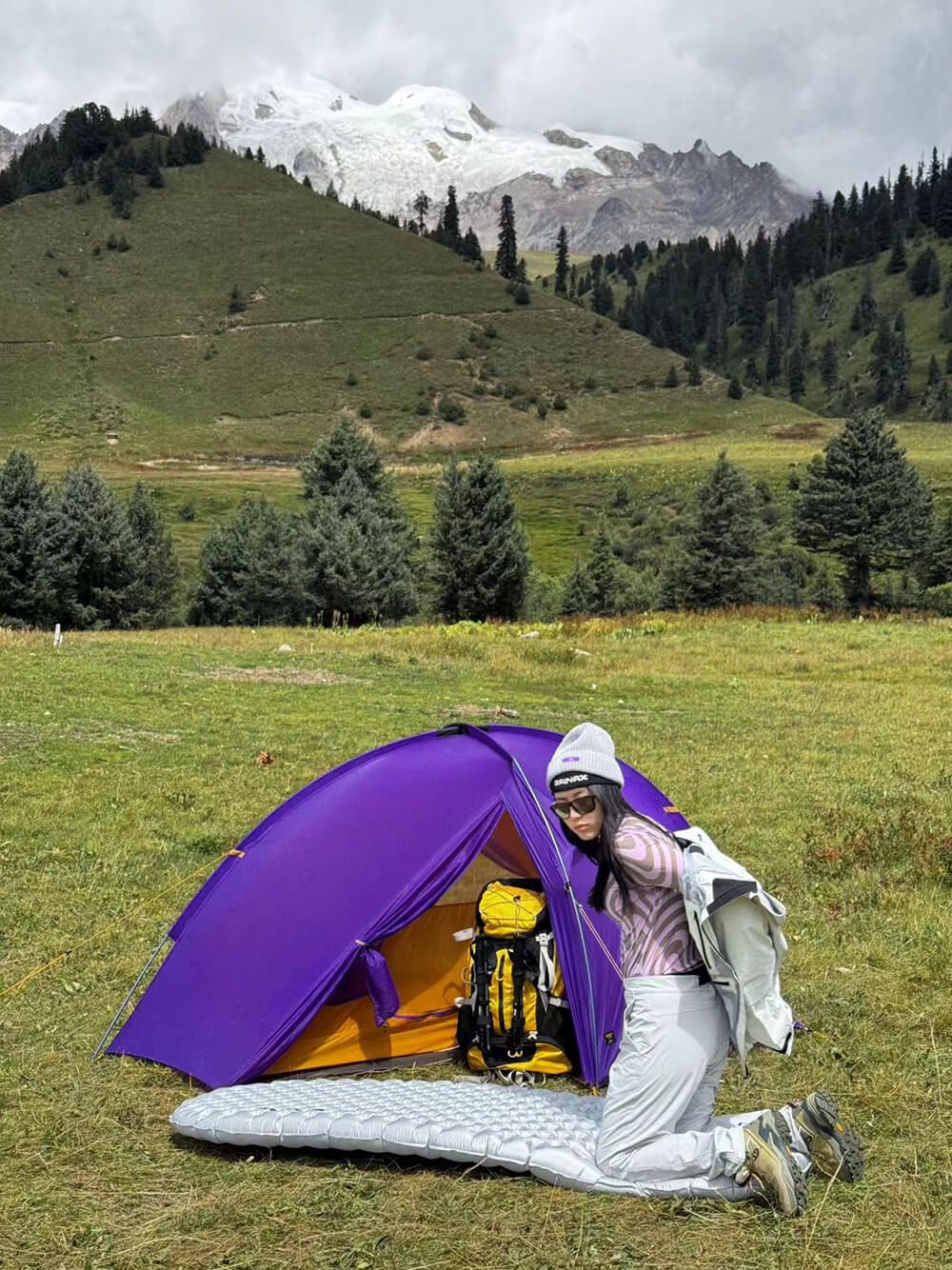
An inflatable sleeping pad can make a huge difference to how well you sleep outdoors. A good pad adds comfort, insulation and a little bit of campsite luxury without taking up much pack space. For UK backpacking, the choice matters because nights can be damp, cool and uneven underfoot, even in summer.
The first thing to check is the R value. This measures insulation. A higher R value means better protection from cold ground. For summer UK camping, an R value around 2 can be enough for mild conditions. For spring, autumn or colder hill camps, look closer to 3 or 4. For winter, you may want 5 or higher.
Thickness affects comfort. Many inflatable pads are 5 cm to 9 cm thick. Side sleepers usually prefer a thicker pad because hips and shoulders need more cushioning. Back sleepers may be comfortable on something thinner. If you often wake with sore hips on foam mats, an inflatable pad is worth considering.
Weight is important for backpacking. Ultralight pads can weigh under 500g, but they may use thinner materials. Heavier pads are often more durable and quieter. Do not choose only by weight. A pad that is too fragile or uncomfortable is not a good bargain.

Packed size is one of the big advantages of inflatable sleeping pads. They pack much smaller than closed-cell foam mats, which is useful for smaller rucksacks. This makes them popular for multi-day hikes and wild camping trips.
Durability matters in the UK because pitches are not always smooth. Rough grass, hidden stones, heather and grit can damage thin fabrics. Use a tent footprint or clear the pitch carefully before setting up. Never place an inflatable pad directly on sharp ground without protection.
Noise is often overlooked. Some ultralight insulated pads sound crinkly when you move. This may not bother everyone, but light sleepers should pay attention to reviews. A noisy pad can be annoying in a quiet tent.
Width and shape also matter. Mummy-shaped pads save weight but give less room to move. Rectangular pads are more comfortable but heavier. If you move around at night, a wider pad may be worth the extra grams.
Inflation system is another detail. Some pads come with a pump sack, which is useful because it keeps moisture from your breath out of the pad. Breath inflation is simple, but repeated moisture inside the pad can be less ideal over time, especially in cold weather.
For most UK backpackers, a good all-round inflatable pad should have an R value around 3 to 4, a weight you are happy carrying, enough thickness for your sleeping style and a reliable valve. If you camp mostly in summer, you can go lighter. If you camp in the hills outside summer, warmth becomes more important.
A sleeping pad is not just about softness. It is part of your sleep system. Your sleeping bag keeps warmth around you, but the pad protects you from cold ground. Choose it carefully and your nights outdoors will feel much better.



Commenta
Questo sito è protetto da hCaptcha e applica le Norme sulla privacy e i Termini di servizio di hCaptcha.