
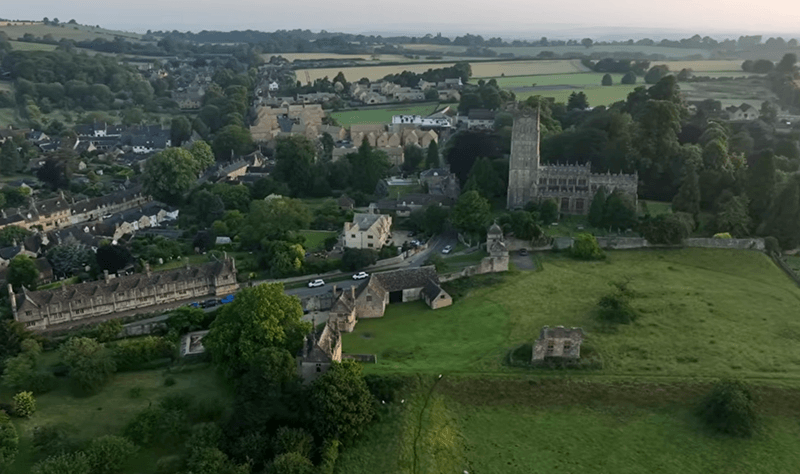
The Cotswold Way is one of the most charming long-distance walking routes in England. Running for about 102 miles, or 164 kilometres, it links the market town of Chipping Campden in the north with the World Heritage city of Bath in the south. For anyone searching “Cotswold Way England”, this trail is a perfect introduction to the softer side of British walking: rolling hills, honey-coloured villages, ancient woodland, historic houses, dry-stone walls and wide views across the Severn Valley.
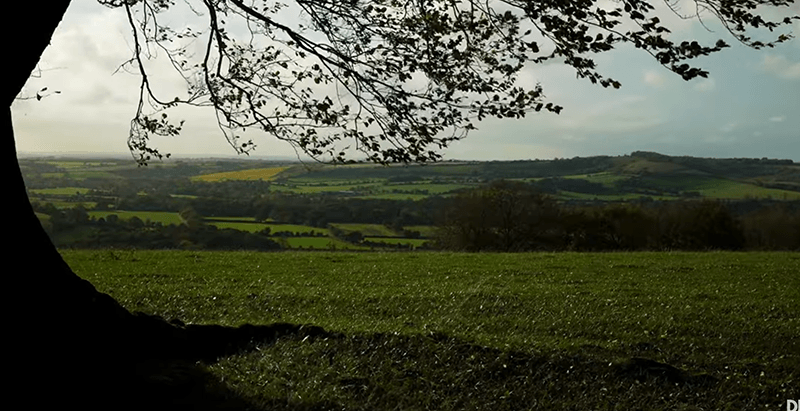
Unlike wilder routes such as the Pennine Way or the South West Coast Path, the Cotswold Way is not about harsh weather and remote survival. Its beauty is quieter and more cultivated. The route generally follows the Cotswold escarpment, which means walkers often enjoy long views westwards towards the River Severn, the Black Mountains and, on a clear day, the Brecon Beacons. At other times, the path drops down into villages and small towns, giving the walk a comfortable rhythm of countryside, history and good places to eat.

The trail can be walked in either direction. Many people choose to start at Chipping Campden and walk south to Bath, partly because Bath makes such a memorable finish. Others prefer to begin in Bath and end in the smaller, more peaceful atmosphere of Chipping Campden. There is no “wrong” direction. The Cotswold Way Association notes that both directions offer a rewarding experience, and some walkers even return to walk it the other way.
One of the best things about the Cotswold Way is its mixture of landscape and heritage. Along the route, walkers pass close to Broadway Tower, Hailes Abbey, Sudeley Castle, Belas Knap long barrow, Cleeve Hill and Dyrham Park. Cleeve Hill is one of the high points of the trail and gives some of the finest views in the Cotswolds. The route also passes through or near well-known places such as Winchcombe, Painswick, Wotton-under-Edge and Bath. These are not just convenient stops; they are part of the character of the walk.
In terms of difficulty, the Cotswold Way is usually considered moderate. It is well waymarked and does not involve technical mountain terrain, but it should not be dismissed as an easy stroll. There are repeated climbs and descents along the escarpment, and some days can feel harder than the mileage suggests. Mud can also be an issue after rain, especially through woodland and field paths. Good walking shoes, waterproof clothing, water, snacks and an offline map are still sensible.
Most walkers take around 7 to 10 days to complete the full route, though it can be stretched into a slower two-week journey. It also works very well in sections. The Cotswold Way Association highlights shorter circular walks and stage-based options, which are ideal for people who only have a weekend or want to walk without carrying a heavy pack. Luggage transfer services are available, and accommodation should be booked ahead in busy months because some villages have limited options.
The path itself is free to walk. Main costs come from accommodation, food, transport, parking, guidebooks and baggage transfer. Wild camping is generally not allowed without landowner permission, so most walkers use B&Bs, inns, guesthouses or campsites.
The Cotswold Way is special because it feels deeply English without becoming dull or predictable. It has history, views, villages, beech woods, limestone cottages and enough hills to make the journey feel earned. For walkers who want beauty, comfort and a strong sense of place, the Cotswold Way in England is one of the finest National Trails to choose.

Commenta
Questo sito è protetto da hCaptcha e applica le Norme sulla privacy e i Termini di servizio di hCaptcha.