
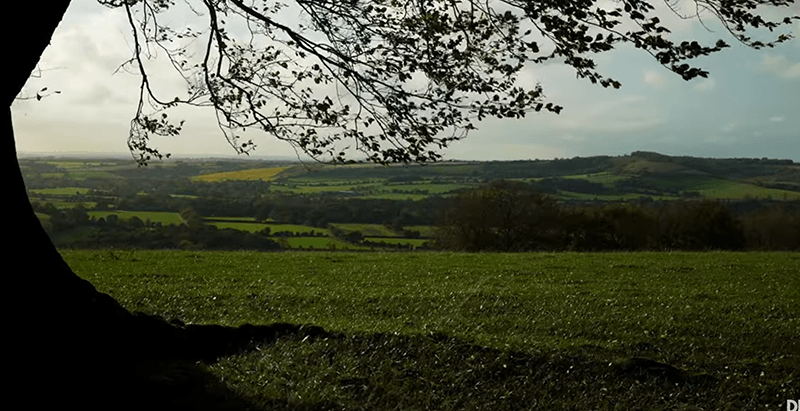
The South Downs Way is one of the most accessible and rewarding National Trails in England. Stretching for 100 miles, or 160 kilometres, it runs from Winchester in Hampshire to Eastbourne in East Sussex, following the chalk ridges and old tracks of the South Downs. For anyone searching “South Downs Way England”, this route offers a very British mix of open hills, ancient paths, river valleys, woodland, farmland, village pubs and white sea cliffs.
Unlike some long-distance trails in the United Kingdom, the South Downs Way is not remote in a harsh, wilderness sense. Its appeal is different. The route stays mostly high on the downs, giving wide views north across the Weald and south towards the English Channel. On clear days, the landscape feels spacious and bright, with big skies, rolling chalk grassland and a strong sense of history underfoot. Many of these tracks were used for centuries as droveways and trading routes because the higher chalk ground was drier than the lowlands.

The trail begins in Winchester, an old cathedral city with deep historical roots, and gradually moves east through the South Downs National Park. Along the way, walkers pass places such as Old Winchester Hill, Queen Elizabeth Country Park, Amberley, Devil’s Dyke, Ditchling Beacon, Lewes, Alfriston and Jevington. The final approach to Eastbourne is one of the great endings of any English trail, crossing the Seven Sisters and Beachy Head, with bright white cliffs dropping to the sea.
One of the special things about the South Downs Way is that it is not only for walkers. Much of the route is also suitable for cyclists and horse riders, making it one of the more versatile National Trails. Mountain bikers often take two to four days to complete it, while walkers usually allow around seven to nine days. It also works very well as a section walk. Because the route is close to London, Brighton, Portsmouth and other towns, many people walk it over several weekends rather than in one continuous trip.
In terms of difficulty, the South Downs Way is moderate rather than extreme. There are no mountains, and the trail is generally well waymarked, but it should not be underestimated. The route includes repeated climbs and descents, especially around river valleys and the eastern cliffs. Water can also be a planning issue. Because the path often stays high on the ridge, shops and taps are not always directly on the trail. In summer, the chalk tracks can be hot, dry and exposed; after rain, some sections may become slippery.
The best time to walk the South Downs Way is usually from April to October. Spring brings wildflowers and fresh green hills, summer gives long daylight, and early autumn often has softer weather and fewer crowds. Even so, the English coast can be windy, and weather can change quickly near the Seven Sisters and Beachy Head. A waterproof jacket, sun protection, good footwear, water, snacks and an offline map are all sensible.
The path itself is free to walk. Main costs come from accommodation, meals, transport, parking, baggage transfer and campsites. Wild camping is generally not allowed in England without landowner permission, so most walkers use B&Bs, pubs, campsites or hostels.
The South Downs Way is not the wildest trail in Britain, but it may be one of the most enjoyable. It has enough hills to feel like a real journey, enough villages to stay comfortable, and enough views to make each day memorable. From Winchester’s historic streets to the cliffs above Eastbourne, it is a beautiful way to experience southern England on foot.

Commenta
Questo sito è protetto da hCaptcha e applica le Norme sulla privacy e i Termini di servizio di hCaptcha.