

Hadrian’s Wall Path is one of the most distinctive long-distance walks in the United Kingdom. Stretching for 84 miles, or 135 kilometres, it runs across northern England from Wallsend near Newcastle upon Tyne to Bowness-on-Solway on the Cumbrian coast. Unlike many British trails, this route is not only about landscape. It is also a walk through Roman history, following the line of Hadrian’s Wall, the great frontier built under Emperor Hadrian in AD 122.
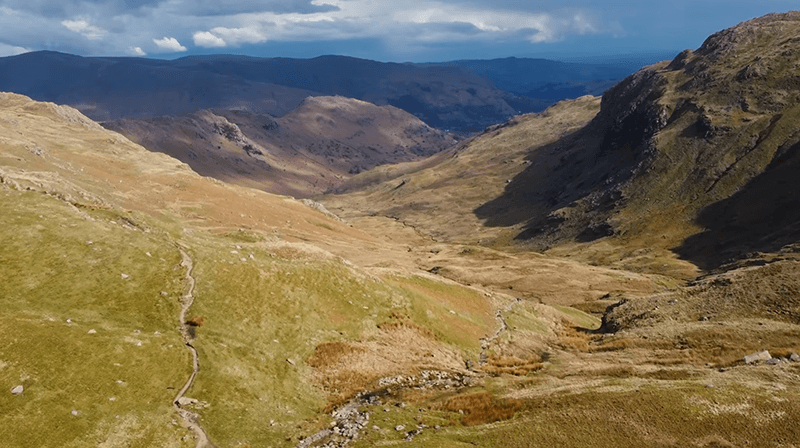
The trail can be walked in either direction, but many people start in Wallsend and head west. The beginning has an urban character, moving through Newcastle and along the River Tyne before the countryside gradually opens out. As the route continues, the walking becomes more atmospheric: rolling fields, open moorland, stone villages, Roman milecastles, old forts and long views across Northumberland. By the time the path reaches the central section around Chollerford, Housesteads, Steel Rigg and Walltown, it feels properly wild.

This middle section is the heart of the walk. Here, Hadrian’s Wall runs along the Whin Sill escarpment, rising and falling across dramatic crags. Housesteads Roman Fort is one of the major highlights, often described as Britain’s most complete Roman fort. Vindolanda, Chesters and Birdoswald are also worth time if you want to understand the frontier beyond the stones themselves. The walk is much richer if you slow down and visit at least one or two Roman sites along the way.
Hadrian’s Wall Path is often considered a good first National Trail because it is well waymarked and has plenty of villages, pubs and accommodation nearby. That said, it should not be treated as effortless. Most walkers take around 6 to 8 days to complete the full route, though faster itineraries and shorter highlight sections are common. The terrain is moderate overall, but the central hills can be tiring, especially in wind or rain.
The path itself is free to walk. Main costs come from accommodation, food, transport, baggage transfer and entry fees for Roman forts or museums. Booking ahead is sensible in spring and summer, especially in smaller villages. The best walking season is usually from May to October, when the ground is drier and daylight is longer.
Good footwear, waterproof clothing, water, snacks and an offline map are all recommended. Northern English weather changes quickly, and exposed sections can feel cold even outside winter. Walkers should also remember that Hadrian’s Wall is an ancient monument: do not walk on the Wall, climb on it, or remove stones. Stay on the path, close gates, keep dogs under control and respect farmland.
What makes Hadrian’s Wall Path special is its balance. It is long enough to feel like a real journey, but manageable enough for many ordinary walkers. You get Roman history, open country, lively cities, quiet villages and a memorable coast-to-coast finish. For anyone interested in walking, history and the landscapes of northern England, Hadrian’s Wall Path is one of Britain’s most rewarding trails.

Commenta
Questo sito è protetto da hCaptcha e applica le Norme sulla privacy e i Termini di servizio di hCaptcha.