
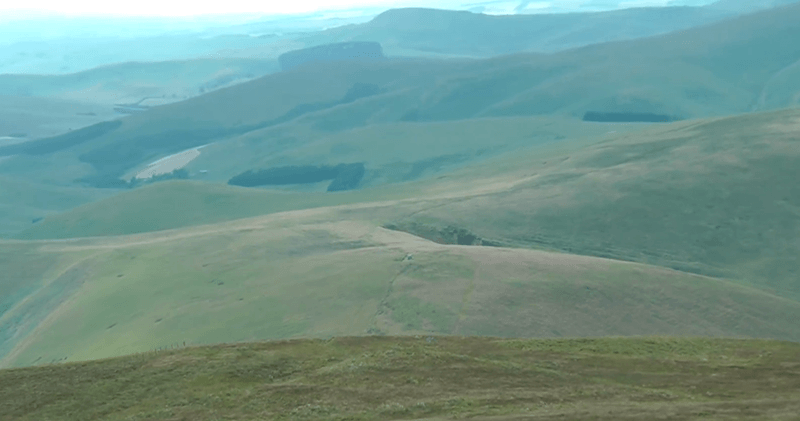
The Pennine Way is one of the most famous long-distance walking routes in the United Kingdom. Stretching for about 268 miles from Edale in Derbyshire to Kirk Yetholm in the Scottish Borders, it follows the rugged spine of northern England through some of the country’s wildest upland landscapes. Opened in 1965, it was Britain’s first National Trail, and it still has the feeling of a proper outdoor challenge rather than a polished tourist route.
The trail begins in the Peak District, climbing out of Edale and quickly setting the tone: hills, moorland, open weather and big views. From there, the Pennine Way heads north through the Yorkshire Dales, across Swaledale, over the North Pennines, past Hadrian’s Wall in Northumberland, and finally through the Cheviot Hills before reaching Scotland. This variety is one of the route’s great strengths. It is not just a walk across hills; it is a journey through different versions of northern Britain.
For many walkers, the Yorkshire Dales section is one of the highlights. The route passes close to dramatic limestone scenery, traditional villages, dry-stone walls and open valleys. Places such as Malham, Horton-in-Ribblesdale, Hawes and Keld give the walk a strong sense of local character. Malham Cove is especially memorable, with its huge limestone amphitheatre and pavement above. Further north, the trail becomes more remote, with fewer settlements and a stronger feeling of isolation.
The Pennine Way is often described as one of England’s toughest National Trails, and that reputation is deserved. The total ascent is greater than the height of Mount Everest, and the terrain can be wet, rough and boggy. Some sections are firm and well maintained, but others cross exposed moorland where weather and navigation matter. Even in summer, walkers should expect rain, wind and poor visibility. Waterproof clothing, strong boots, spare socks, food, water, and an offline map are not optional extras; they are basic kit.
Most people take around 16 to 19 days to complete the full route, though it can easily be walked in shorter sections. A week on the Pennine Way can still feel like a full adventure. Popular stopping points include Hebden Bridge, Skipton, Hawes, Appleby and the Hadrian’s Wall area. These places are useful not only for accommodation and supplies, but also for rest days. On a route this long, a rest day can make the difference between enjoying the walk and simply enduring it.

The best time to walk the Pennine Way is usually from mid-May to September. During this period, the days are longer, services are more reliable, and the weather is generally kinder. That said, “kinder” in the Pennines does not mean predictable. Winter walking is possible, but snow, short daylight and difficult ground make it suitable only for experienced walkers.
The trail itself is free to walk. Costs come from accommodation, meals, transport, baggage transfer, maps and occasional campsites. Wild camping in England generally requires landowner permission, so anyone planning overnight stops should think carefully and book ahead, especially in summer.
What makes the Pennine Way special is not comfort. It is the mix of effort, weather, history and space. You feel the old tracks under your feet, the wind across the moors, the relief of a village after a long wet day, and the satisfaction of moving north under your own power. For anyone searching “Pennine Way United Kingdom” and wondering whether it is worth the effort, the answer is yes, as long as you come prepared. It is demanding, muddy, beautiful, and one of the great walking experiences in Britain.

Commenta
Questo sito è protetto da hCaptcha e applica le Norme sulla privacy e i Termini di servizio di hCaptcha.