
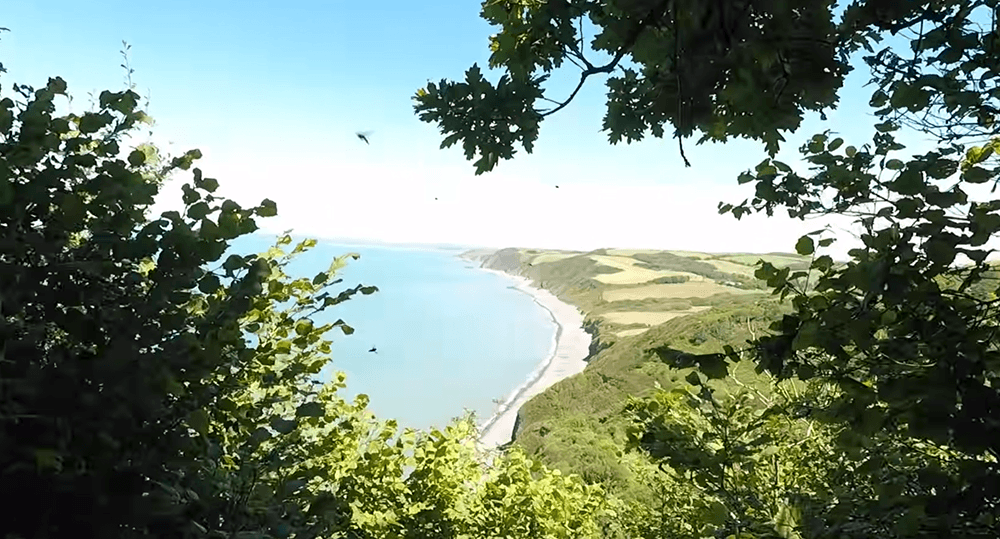
The South West Coast Path is one of the most famous long-distance walking routes in the UK. It stretches for about 630 miles from Minehead in Somerset to Poole Harbour in Dorset, passing through Devon and Cornwall along the way. Although it follows the coastline, it is not an easy flat seaside walk. The route climbs and drops again and again, crossing cliffs, beaches, river mouths, farmland, fishing villages and exposed headlands. For many walkers, this constant change is exactly what makes the path so memorable.
One of the best things about the South West Coast Path is its variety. In Somerset, the route begins quietly, with wooded cliffs and wide sea views. North Devon feels wilder, with high cliffs, rough weather and long stretches between settlements. Cornwall is often the most dramatic part, especially around St Ives, Land’s End and Tintagel, where the path can feel narrow, windy and remote. Further east, Dorset brings a different kind of beauty. The Jurassic Coast, including places like Durdle Door and Lulworth Cove, gives the walk a strong geological character.

The path is free to walk, but the trip itself is not cost-free. Most walkers spend money on accommodation, meals, transport, parking or luggage transfer. Since the full route is very long, many people choose one section and walk it over several days. Popular choices include Padstow to Newquay, St Ives to Penzance, or Exmouth to Lyme Regis. In summer, it is sensible to book rooms or campsites early, because coastal villages can fill up quickly.
The route is not highly technical, but it can be physically demanding. Distances on paper can be misleading, because the repeated climbs and descents make each day harder than it looks. A ten-mile day with steep coastal paths may feel much longer than expected. Good walking shoes, waterproof clothing, water, snacks and an offline map are essential. The weather can change quickly: sunshine, sea mist, wind and rain may all arrive in the same afternoon.
Safety also matters. Walkers should keep away from cliff edges, as erosion can make the ground unstable. Tide times should be checked before using beaches or low-tide shortcuts. Mobile signal is not always reliable in remote coves, so relying only on a phone is risky. It is also important to respect the countryside: stay on marked paths, close gates, keep dogs under control, avoid disturbing livestock and wildlife, and take all litter away. Wild camping is generally not allowed in England without the landowner’s permission, and fires or BBQs are usually a bad idea on dry grass or protected land.
The South West Coast Path is not just a route to complete. It is a slow journey along the edge of England. You remember the salt wind, muddy boots, gulls above the harbour, steep climbs after lunch, and the relief of finding a pub or tea room at the end of the day. It can be tiring, wet and unpredictable, but that is part of its charm. For walkers who enjoy coastal scenery, small villages and a real sense of distance, it is one of the most rewarding trails in Britain.

Commenta
Questo sito è protetto da hCaptcha e applica le Norme sulla privacy e i Termini di servizio di hCaptcha.