
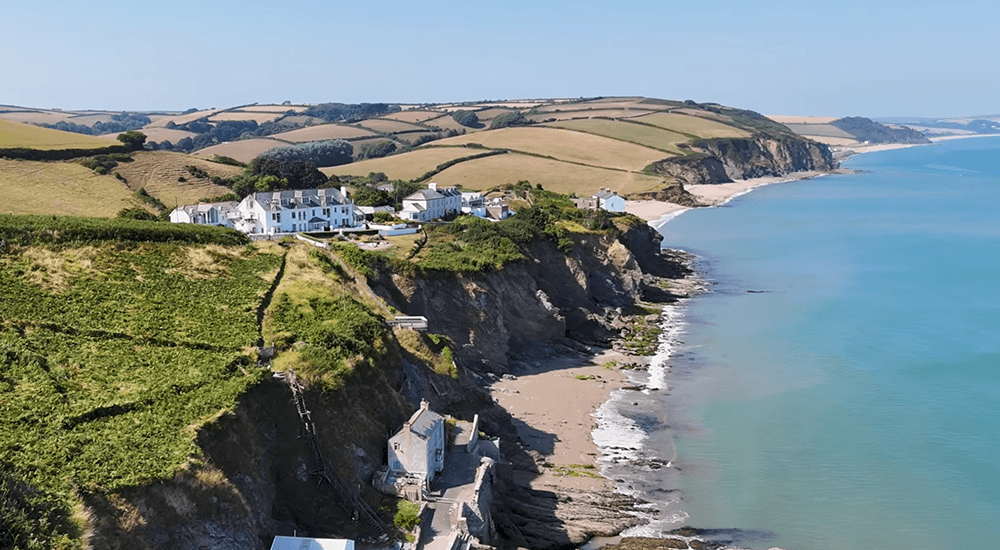
South Devon is one of the most varied sections of the South West Coast Path. It does not have the raw drama of far west Cornwall or the famous geology of the Jurassic Coast, but it has something equally appealing: a rich mixture of maritime history, quiet estuaries, hidden coves, surf beaches, nature reserves and lively seaside towns. For walkers, this part of the coast feels both adventurous and comfortable. One day can be all wind, cliffs and steep valleys; the next can end with fresh seafood in a harbour town.
A natural place to begin is Plymouth. Before leaving the city behind, it is worth spending time around the historic waterfront and docks. The Mayflower Steps, where the Pilgrim Fathers set sail for the New World in 1620, sit directly on the South West Coast Path. From there, the route quickly changes character. The busy city gives way to calmer landscapes around the Yealm and Erme estuaries, both excellent places for birdwatching and sailing. This contrast is part of South Devon’s charm: you move from urban history into quiet water, wooded banks and open coastline surprisingly fast.

Further along, the path reaches some of South Devon’s best-loved coastal villages, including Bigbury-on-Sea, Bantham and Hope Cove. Burgh Island is a highlight. At low tide, you can walk across the sand; when the tide comes in, the famous sea tractor carries visitors over the water. The island is also known for its art deco hotel and its connection with Agatha Christie, which gives the place a slightly old-fashioned, literary atmosphere. Bantham Beach, meanwhile, is one of the better surf beaches on this coast, and on calmer days the area is good for paddleboarding.
The walking becomes more demanding as the route continues towards Salcombe. Expect steep valleys, gorse-covered cliffs and wide views over the Salcombe estuary. This is not technical mountain walking, but the constant climbing and descending can tire the legs. Salcombe itself is a popular holiday town with a strong food scene, especially for fish and seafood. It makes a good stopping point if you want a mix of coastal walking and a more polished seaside atmosphere.
Beyond Salcombe, South Devon becomes wilder again. Start Point is exposed and atmospheric, while Hallsands is a reminder of how powerful the sea can be: the old fishing village was badly damaged after dredging left it vulnerable to storms. Slapton Ley National Nature Reserve adds another layer to the landscape, with freshwater lagoon, shingle beach and rich wildlife.
Dartmouth is another major highlight, with Dartmouth Castle overlooking the water and Greenway, once Agatha Christie’s holiday home, nearby. The final stretch through the English Riviera brings a livelier mood, passing Brixham, Berry Head, Paignton, Torquay, Teignmouth and Dawlish. Here the Coast Path blends nature, resorts, harbours and classic seaside energy.
South Devon is ideal for walkers who want variety rather than wilderness alone. The path is free to walk, but plan for accommodation, ferries, food and transport. Check tide times, carry waterproofs, and allow more time than the mileage suggests. This is a coast best enjoyed slowly, with room for detours, seafood, estuary crossings and long pauses above the sea.

Commenta
Questo sito è protetto da hCaptcha e applica le Norme sulla privacy e i Termini di servizio di hCaptcha.