
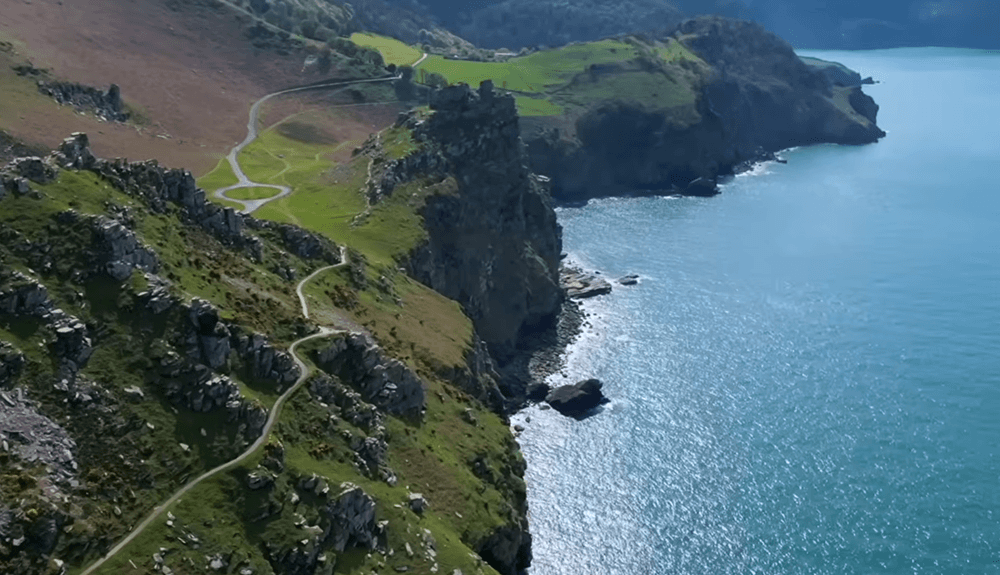
Somerset and Exmoor form the opening chapter of the South West Coast Path, and it is a much stronger start than many walkers expect. This section runs for about 35 miles from Minehead to Combe Martin, making up just over five percent of the full National Trail. It may be short compared with the whole 630-mile route, but it has a big character: high cliffs, wooded coast, open moorland, deep combes, wildlife and some of the finest views across the Bristol Channel.
Minehead is the official starting point of the South West Coast Path. On the seafront, a bronze monument marks the beginning of the trail, showing hands holding a map. It is a small but meaningful place to begin, especially for anyone planning to walk a longer section. From here, the path soon leaves the town behind and climbs towards North Hill, where the walking becomes more open and the views begin to stretch towards Wales and along the coast ahead.

The Exmoor coast is famous for its scale. According to the South West Coast Path Association, this area has the highest coastline in England and Wales, rising to 433 metres at Culbone Hill. It also includes Great Hangman, the highest sea cliff in England and Wales at 244 metres. For walkers, these figures translate into real effort. The route is not technically difficult, but it involves hard climbs, exposed tops and long descents into wooded valleys. Good boots and steady pacing matter here.
One of the most beautiful parts of this section is the coastal woodland between The Foreland and Porlock. It is one of the longest stretches of coastal woodland in the country, and it gives the walk a different feeling from the open cliffs further west. There is shade, birdsong, damp paths and that deep green atmosphere you only get in old woodland near the sea. Around North Hill, walkers may also see Dartford warblers and nightjars, while Exmoor is well known for red deer and wild ponies.
Porlock Weir is a natural place to pause. Its harbour-side pubs are welcome after the hills, and nearby Porlock Bay has a remarkable feature: the remains of an ancient submerged forest, visible at low tide. These fossilised tree stumps are around 6,000 years old, a reminder that this coast has been changing for thousands of years. The tidal range here can be enormous, sometimes rising and falling by as much as 15 metres, so tide awareness is especially important.
Selworthy Beacon is another highlight. At 308 metres, it offers wide views inland to Dunkery Beacon, out across the water, and onwards along the route. On a clear day, it feels like a proper farewell to the starting coast before the path continues towards North Devon.
Somerset and Exmoor are free to walk, but the terrain deserves respect. Carry waterproofs, water, food, an offline map and warm layers, even in mild weather. Check route updates after storms, as fallen trees and damaged paths can affect access. This is not just a gentle introduction to the South West Coast Path; it is a proud, wild and memorable beginning.

Commenta
Questo sito è protetto da hCaptcha e applica le Norme sulla privacy e i Termini di servizio di hCaptcha.